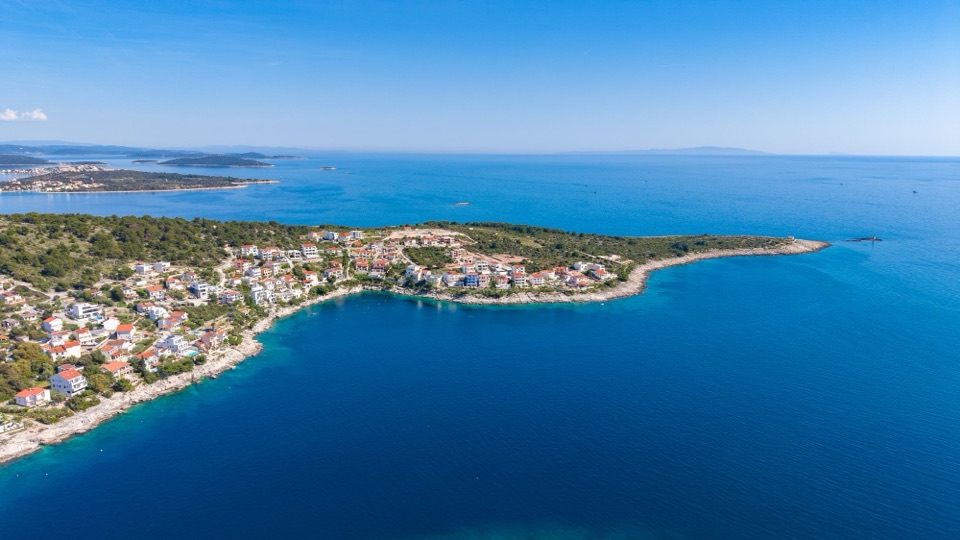
Investing in
Croatian Property
Where the value sits, how to structure it, and how a purchase actually runs. From the first question to the exit.
The investment case
Structural,
not speculative.
Croatian residential prices have risen by roughly 80% since 2020 and were still up 14.3% year on year in early 2026, the fourth-fastest growth in the EU. The drivers are structural: constrained coastal supply, euro and Schengen membership since 2023, a long season and broad international demand.
The macro picture
Croatia has been in the euro and in Schengen since 1 January 2023. S&P raised its credit rating to A in March 2026, with Moody’s at A3 and Fitch at A−. The economy grew 3.4% in 2025, when foreign tourists spent €15.3 billion, and growth of 2.7% is forecast for 2026. New housing loans cost 2.9% on average in mid-2026, below the euro-area average.
What has changed
The market has moved from momentum to selection. Sales fell by about 22% in 2025 and again in early 2026 while prices kept rising, and the Croatian National Bank has warned that prices are growing faster than fundamentals, which raises the risk of a correction if conditions worsen. The state is also steering housing away from short-term rental: an annual property tax since 2025, co-owner consent for tourist lets in apartment buildings, and a new hospitality law in preparation.
An investment case that depends on ever-rising prices and unrestricted short-term letting is weaker than it was. One built on an irreplaceable position is not.
Where value sits
- Irreplaceable positions. Protected views, first row, old-town heritage. Supply cannot grow, which is what supports value when the market slows.
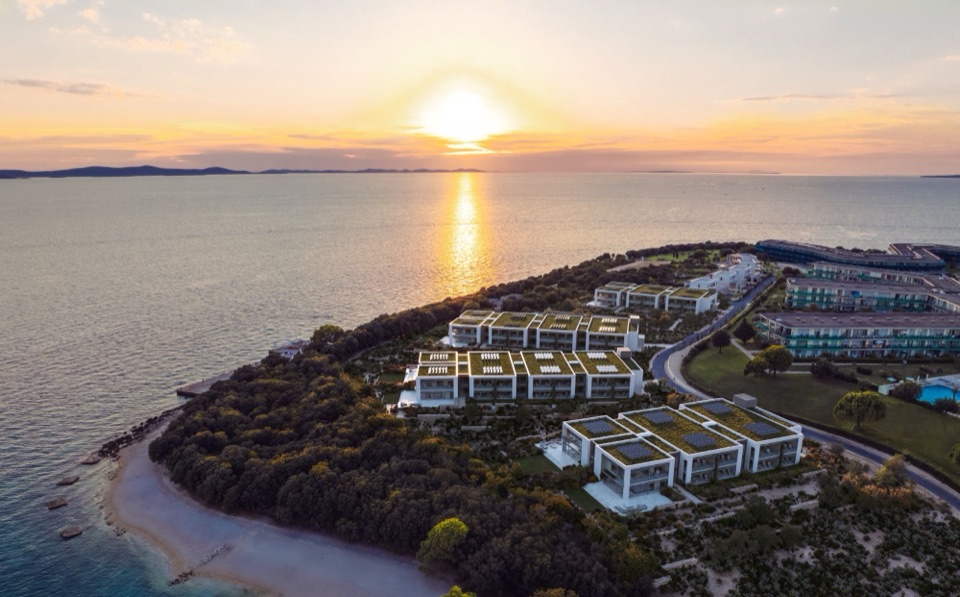
- Boutique developments and resort residences. Managed, with a rental programme. Returns depend on the operator and the contract. An example on the coast.
- Year-round markets near Split Airport. Trogir, Kaštela and Split have resident demand as well as visitors, which supports long-term rental and resale.
- Earlier-cycle markets. Zadar, Šibenik and selected islands, at lower entry prices and with more new supply.
Yield and growth
Gross yields on long-term rental are modest, about 4% nationally, with median rents in Split-Dalmatia around €12 per m² a month. Short-term rental earns more per night, but over a short season: family accommodation in Croatia was occupied for about 60 days on average in 2025. Returns here have come mainly from capital growth, which is why entry price and position matter more than the headline yield.
Risks worth naming
Title and permit irregularities. Regulatory change for short-term rental. Unprotected views. Illiquid micro-locations. Paying a peak price for an average asset. The first four are avoidable with due diligence, the fifth with discipline.
The mechanics
How it
actually works.
1. Who can invest
EU and EEA citizens and companies invest on the same terms as Croatians. Swiss citizens need no consent if they have registered residence in Croatia; Swiss companies are assessed case by case. Other nationals can buy personally where reciprocity exists, with the consent of the Ministry of Justice, Public Administration and Digital Transformation, which typically takes several months. Reciprocity exists for the UK and most US states. It is suspended for Canadians buying homes in larger towns (from 1 January 2023 to 31 December 2026) and for Australians buying existing property (from 1 April 2025 to 31 March 2027), mirroring those countries’ own restrictions on foreign buyers.
This is about to change. A law already adopted takes effect on the day Croatia becomes a full member of the OECD, which is expected soon. From then on, citizens and companies from all OECD member states, including the US, the UK, Switzerland, Canada and Australia, will be able to buy on the same terms as Croatians, without reciprocity or ministerial consent. Agricultural land remains excluded.
2. Personally or through a company
Personally: no tax on the gain after two years, and short-term rental under the flat-rate regime for EU, EEA and Swiss citizens. Through a Croatian company (d.o.o., minimum capital €2,500), which as a rule counts as a domestic buyer: profit tax of 10% up to €1M of revenue and 18% above, 12% tax on dividends paid to individuals, annual accounts, and gains taxed as profit whatever the holding period. For companies controlled by Canadian or Swiss owners the ministry applies special limits. The right answer depends on nationality, use and scale.
3. Costs
| Item | Typical |
|---|---|
| Transfer tax | 3% of market value, paid by the buyer |
| VAT on new builds | 25%, included in the price; no transfer tax then |
| Legal fees | By agreement, typically around 1% |
| Land registry | About €33, half if filed electronically |
| Brokerage commission | Typically 3% plus VAT, under a written agreement |
| Annual property tax | €0.60–8.00 per m² a year; not due if let long-term |
All in, a resale purchase typically costs around 8% on top of the price, commission included. Under the brokerage law in force since July 2026, a buyer who has not signed a brokerage agreement cannot be charged commission.
4. The process
- Objective and structure. What the asset is for decides who buys it and how.
- Sourcing and shortlist. Public listings, developer stock and private opportunities.
- Due diligence. Land registry, cadastre, permits, planning and any right of first refusal.
- Pre-contract and deposit. Typically 10%. If the buyer defaults the seller may keep it; if the seller defaults the buyer may claim double.
- Main contract. The seller’s signature is notarised and the notary reports the sale to the Tax Administration. The seller’s consent to registration is usually released against full payment.
- Registration and tax. Entry in the land registry. Transfer tax is payable within 15 days of the assessment.
5. Financing
Croatian banks lend to non-residents selectively, mainly to EU citizens employed in the EU, and usually at a lower loan-to-value than for residents. Since July 2025 the central bank caps housing loans at 90% of value and debt service at 45% of income. Many international buyers finance at home or buy in cash.
6. Renting
Short-term rental needs a categorisation permit. Private hosts, meaning EU, EEA and Swiss citizens with up to 20 beds, pay a flat tax per bed set by the municipality, from €70 a year in Trogir and Kaštela to €250 in central Split, plus a tourist-tax lump sum. In apartment buildings the consent of more than two-thirds of the co-owners and of every adjoining neighbour is required. Non-EU owners need a company. Long-term rental is taxed at 12% on 70% of the rent, an effective 8.4%, and a lease covering at least ten months of the year exempts the property from the annual property tax.
7. Exit
Individuals pay no tax on the gain after two years of ownership; before that the rate is 24%. Selling more than three properties of the same kind within five years is taxable regardless. Companies pay profit tax on gains. Confirm the current rules with a tax advisor.
Figures as of September 2026. Sources: Croatian Bureau of Statistics, Eurostat, Croatian National Bank, European Commission, Croatian Tax Administration, Ministry of Justice, Ministry of Physical Planning (real estate market review 2025), Global Property Guide, PwC Tax Summaries. General information, not investment, legal or tax advice.
FAQ
Questions we are asked
What yields can I expect?
Long-term rental yields are around 4% gross. Short-term rental can earn more, but over a short season and under tighter rules. We model realistic net numbers per asset rather than quote averages.
Personally or through a company?
EU citizens buying one property: usually personally. Non-EU investors, portfolios and development: often a Croatian company. The choice affects tax on rental income, on the exit and on dividends, so take advice before, not after.
How long does a purchase take?
Two to four months for a clean resale with an EU buyer. Longer for complicated titles, and several months more where a non-EU buyer needs ministerial consent.
Is short-term rental still a good business?
It can be, in the right building and location. But the rules have tightened: an annual property tax, co-owner consent in apartment buildings and a new hospitality law on the way. Houses and villas are less affected than apartments. We would not buy on short-term rental income alone.
Does property ownership give me residence?
Not by itself. Croatia has no golden visa. Non-EU owners can apply for a temporary stay of up to one year on the basis of ownership, at the discretion of the authorities.
Do I need to be in Croatia to buy?
Not necessarily. Contracts can be signed by power of attorney.
Is a Croatian bank account required?
Useful, not strictly necessary. We assist with opening one.
How does PEAK ESTATE charge?
Brokerage commission under a written agreement and our published price list. Corporate mandates are agreed individually.
Build my investment strategy.
Start with the objective.