
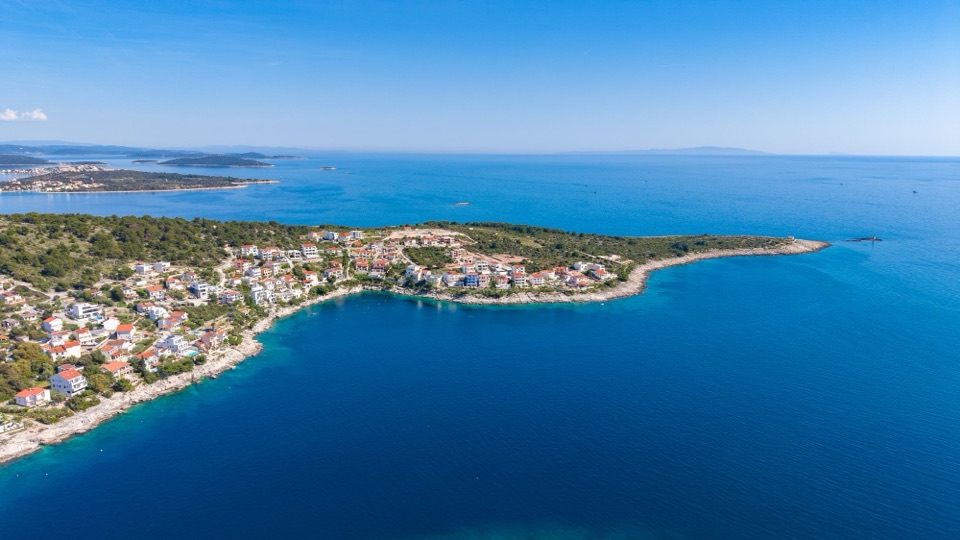
Luxury Real Estate
in Croatia
Where value sits on the Adriatic, how international buyers acquire, and why the best assets are rarely advertised.
The market
One coastline.
Many markets.
Croatia’s coast is not one luxury market but a chain of very different ones. The mainland shore runs for almost 1,800 km and there are more than 1,200 islands, islets and reefs. Prices, buyers and rules change every hundred kilometres.
Istria
The drive-to market: Ljubljana is two hours away, Munich and Vienna five to six. Rovinj is the most expensive town, followed by Umag, Novigrad and Poreč, with stone villas and pools in the hill towns inland. Around a quarter of all property transactions in Istria in 2025 involved a foreign buyer, the highest share in the country.
Kvarner
Opatija, the grand resort of the Habsburg riviera, with its belle-époque villas, and the islands of Krk, Cres and Lošinj behind it. Achieved apartment prices in Opatija are among the three highest in Croatia.
Northern Dalmatia
Zadar and Šibenik: a low-cost airport, the A1 motorway, large marinas and a coastline with more room. Pricing is earlier in the cycle than further south and new supply is strong: Zadar County completed more homes in 2025 than Split-Dalmatia or Istria.
Central Dalmatia
Trogir, Split, Kaštela, the Makarska Riviera and the islands of Brač, Hvar, Šolta and Vis. The deepest and most liquid premium market on the coast, anchored by Split Airport, which handled a record 3.9 million passengers in 2025 and gained a seasonal direct flight from New York in 2026. In 2025 Split recorded the highest median achieved apartment price in the country. This is where we are based. Dalmatia in depth.
Dubrovnik and the south
A walled UNESCO city with very little room to grow, with Cavtat, Pelješac and Korčula around it, connected to the rest of the country since 2022 by the Pelješac Bridge. Prices are among the highest in Croatia, and the market is small.
What luxury means here
Position,
not marble.
The premium on the Adriatic is paid for position: a protected sea view, a first-row plot, an old-town stone house, a private bay. Interiors can be changed. Position cannot.
Why supply is limited
Within 1,000 metres of the sea, on the mainland and on every island, planning law restricts the growth of building zones, rules out new settlements and keeps new building outside settlements at least 100 metres from the shore. The shoreline itself is public maritime domain and cannot be owned. What already stands legally in a good position is, in practice, most of what there will ever be. Waterfront explained.
Price context
Sea-view penthouses and first-row villas in Central Dalmatia are typically priced at roughly €6,000–12,000 per m², new-build sea-view villas with pool between about €1.2M and €4M. Exceptional first-row and island estates are priced individually and mostly sold off-market.
By Mediterranean standards this is still moderate: prime addresses on the Côte d’Azur trade above €20,000 per m².
Who buys
Foreign buyers made about 9,400 purchases in 2025, 8% of all transactions nationwide, and a far higher share on the coast. Slovenia, Germany and Austria account for more than half of them.
Where the market stands
Prices are still rising: the official index was up 14.3% year on year in the first quarter of 2026 and 12.6% on the Adriatic, the fourth-fastest growth in the EU. Volumes are not: sales fell by about 22% in 2025 and again in early 2026. Fewer sales at higher prices is a market in which quality and correct pricing matter more than momentum. Why prices have risen since 2020.
How to buy well
Four questions before any viewing.
- 01
Is the view protected?
The planning status of the land in front decides, not what stands there today. We read the spatial plan before we look at the terrace.
- 02
Is the title clean?
Land registry and cadastre must match each other and the building. Permits are checked against what was actually built.
- 03
What is the structure?
Personal or company, resale with transfer tax or new build with VAT. For non-EU buyers the route decides the timeline.
- 04
What is the exit?
Who buys this from you in ten years, and what does it cost to hold until then? Tax, upkeep and liquidity belong in the decision.
The framework
What it costs
to buy and hold.
EU and EEA citizens buy on the same terms as Croatians. Swiss citizens need no consent either, provided they have registered residence in Croatia. Buyers from other countries need reciprocity and the consent of the Ministry of Justice.
That is about to change. With Croatia’s full membership of the OECD, which is expected soon, citizens of all OECD member states will be able to buy on the same terms as Croatians. The guide for foreign buyers.
| Item | What to expect |
|---|---|
| Transfer tax | 3% of market value, paid by the buyer on resale property |
| VAT | 25% on new builds sold by a developer, normally included in the quoted price; no transfer tax then |
| Legal and registry | Lawyer by agreement, typically around 1%; land registry fees are nominal |
| Brokerage | Typically 3% plus VAT, under a written agreement |
| Annual property tax | €0.60–8.00 per m² a year since 2025, set by each municipality; not due on a primary residence or a long-term let |
| Tax on resale | None for private owners after two years of ownership; 24% of the gain before that |
Figures as of September 2026. Sources: Croatian Bureau of Statistics, Eurostat, Croatian Tax Administration, Ministry of Physical Planning (real estate market review 2025), Knight Frank. General information, not legal or tax advice.
FAQ
Questions we are asked
Can foreigners buy luxury property in Croatia?
Yes. EU and EEA citizens buy like Croatians, as do Swiss citizens with registered residence in Croatia. Other nationals need reciprocity and the consent of the Ministry of Justice, which covers the UK and most US states. Two countries are temporarily restricted: Canadians cannot buy homes in larger towns until the end of 2026, and Australians cannot buy existing homes until March 2027. A Croatian company is an alternative for most non-EU buyers. With Croatia’s full OECD membership, which is expected soon, citizens of all OECD member states will be able to buy on the same terms as Croatians. Details here.
What are the purchase costs?
3% transfer tax on resale property, or 25% VAT included in the price of a new build. Add legal fees of around 1% and brokerage commission of typically 3% plus VAT under a written agreement. All in, a resale purchase typically costs around 8% on top of the price.
Where is the strongest luxury market?
Central Dalmatia between Trogir and Makarska: the busiest airport on the coast, the deepest buyer pool and the most constrained supply. In the north it is Opatija. Split and Opatija were both among the three places with the highest achieved apartment prices in the country in 2025.
Are prices still rising?
Yes, by 14.3% year on year in early 2026, while the number of sales has fallen sharply. The Croatian National Bank has warned that prices are growing faster than fundamentals. We treat that as a reason to be selective about position and disciplined on price.
Is there an annual property tax?
Since 2025, yes: €0.60–8.00 per m² a year, set by each municipality. In 2026 it is €5 in Split, €2 in Trogir and €3 in Hvar. A primary residence and a home let long-term are exempt; holiday homes and short-term rentals are not.
Does buying property give me residence?
Not by itself. Croatia has no golden visa. EU citizens have free movement; non-EU owners can apply for a temporary stay of up to one year on the basis of ownership, at the discretion of the authorities.
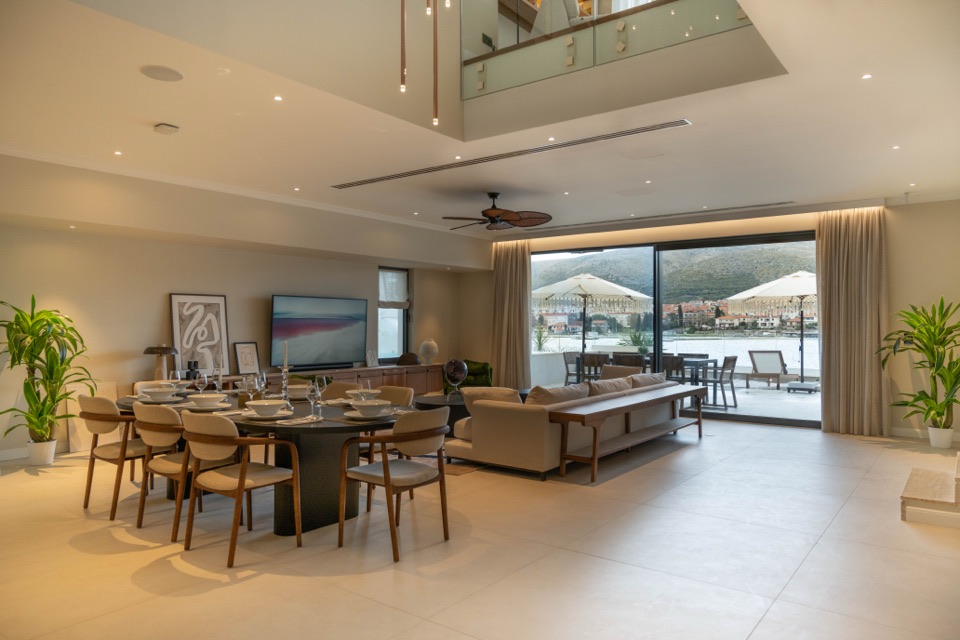
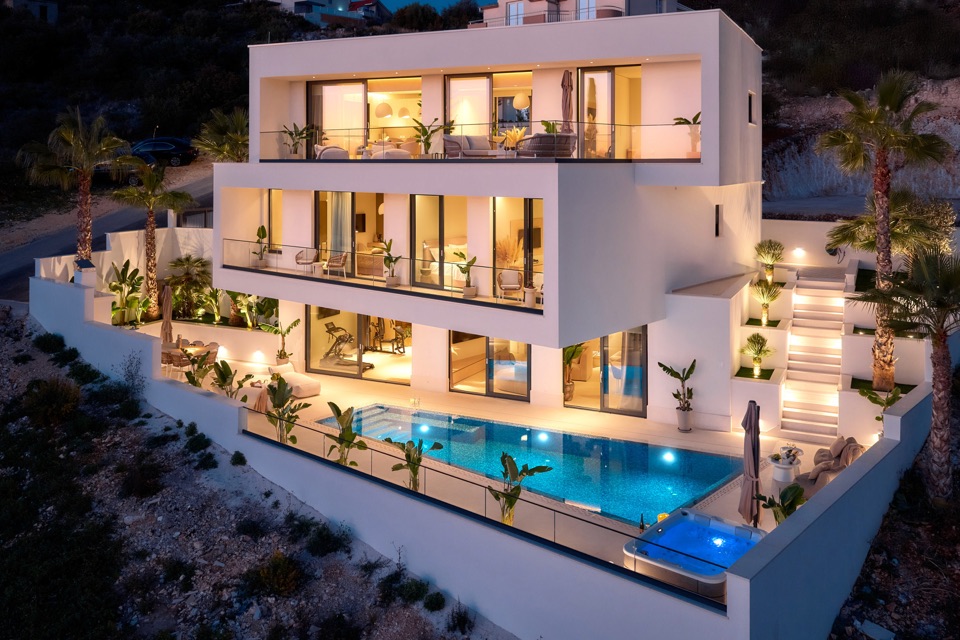
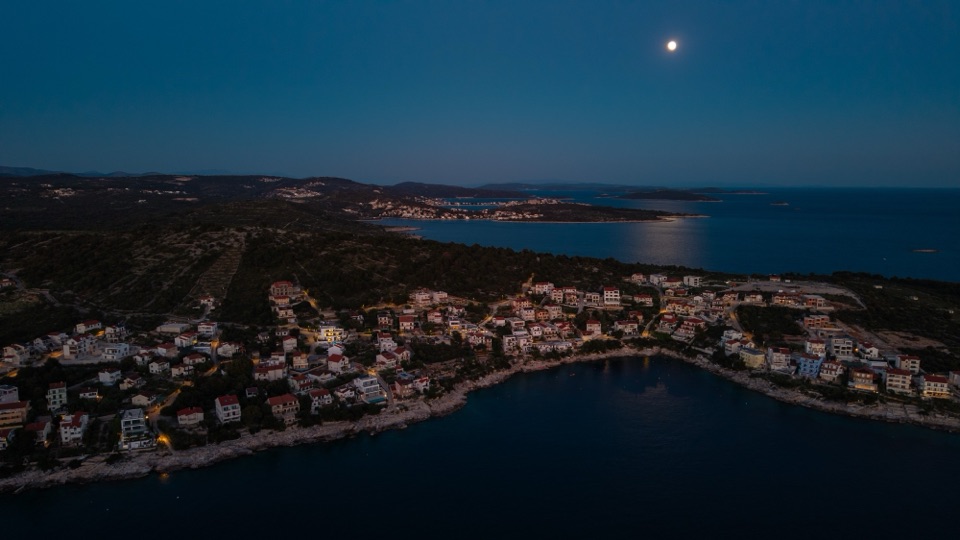
Access the Croatian coast differently.
Tell us the objective. We will tell you where.